A clip for a half-up style and one for a full twist have different jobs. Start with how much hair you want to gather, then compare the clip’s usable space, profile and manufacturer guidance. A longer clip is a useful clue, but its length alone cannot tell you whether it will hold your hair.
Half-up: choose for the upper section. Full-up: compare room around the whole gathered twist. Lower profile: compare shape separately from capacity.
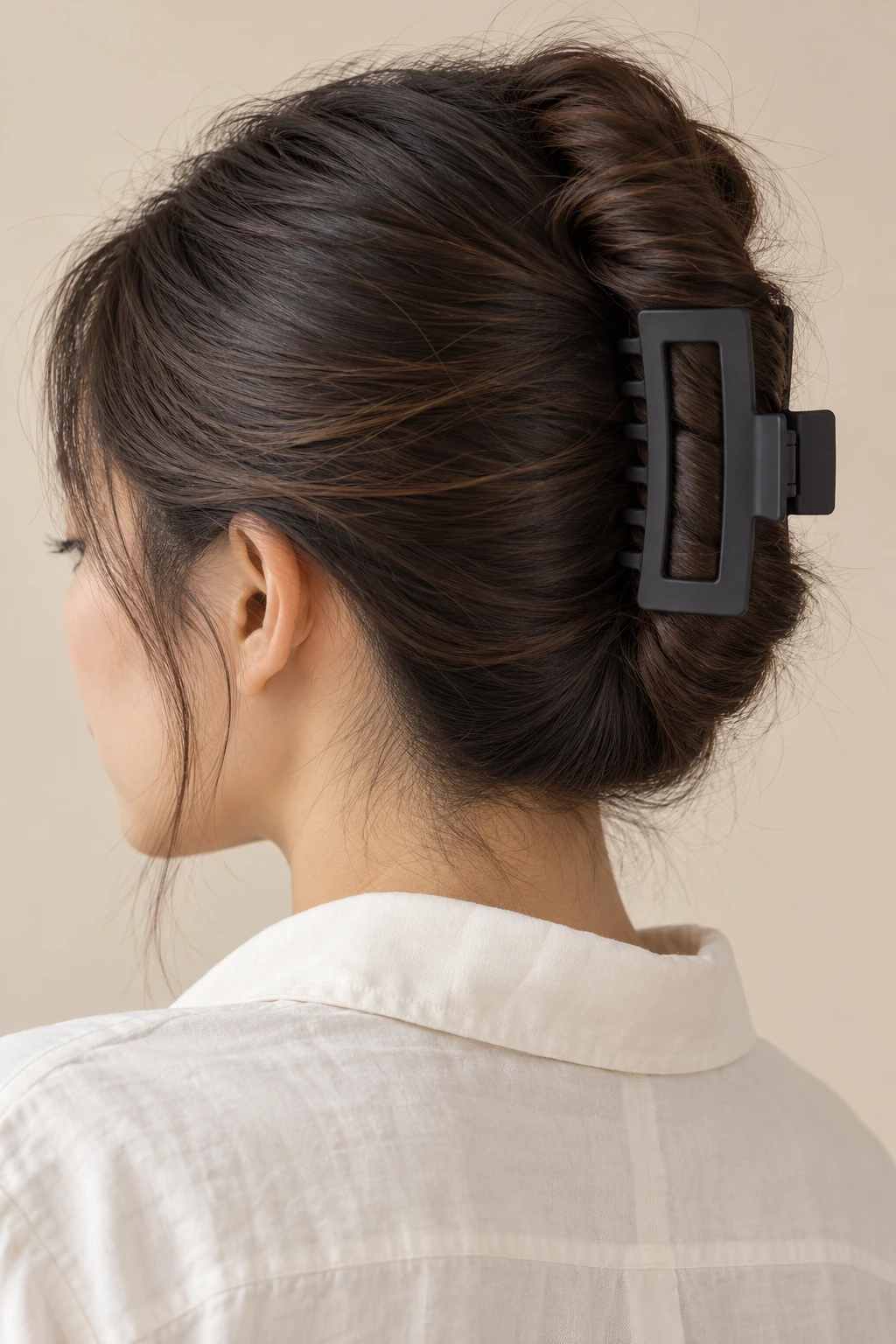
Browse large claw clips. Compare the stated dimensions, jaw space and profile against the amount gathered; no universal hold or exact-image match is claimed.
Browse related options · compare the match notes
Affiliate links. We may earn a commission from qualifying purchases. As an Amazon Associate I earn from qualifying purchases.
Three checked examples
These are dimensions and intended hair amounts published by TELETIES, checked 24 October 2026. We have not tested their hold.
Medium Open · 3.73 inches
The maker describes this size for thin to medium-thick hair. It is a smaller comparison point, not a recommendation that it will contain a full thick-hair twist.
Read the Medium Open specification ↗Large Open · 4.5 inches
The maker describes this size for thick to super-thick hair. Its curved, open design differs from the rectangular illustrative clip shown here.
Read the Large Open specification ↗Large Flat Square · 4.5 inches
The same listed length as the Large Open, with a flatter profile. The maker also describes this size for thick to super-thick hair. Compare shape as well as length.
Read the Large Flat Square specification ↗Ordinary retailer links; we earn no commission. Check current stock, delivery and the exact size before ordering. The generated clips are different illustrative designs.
Less hair inside can change the choice
In a half-up style, the lower section remains loose. That changes the amount the clip has to surround, even on the same head of hair. A large clip that suits your full twist may feel bulky when you only want to secure a smaller upper section.
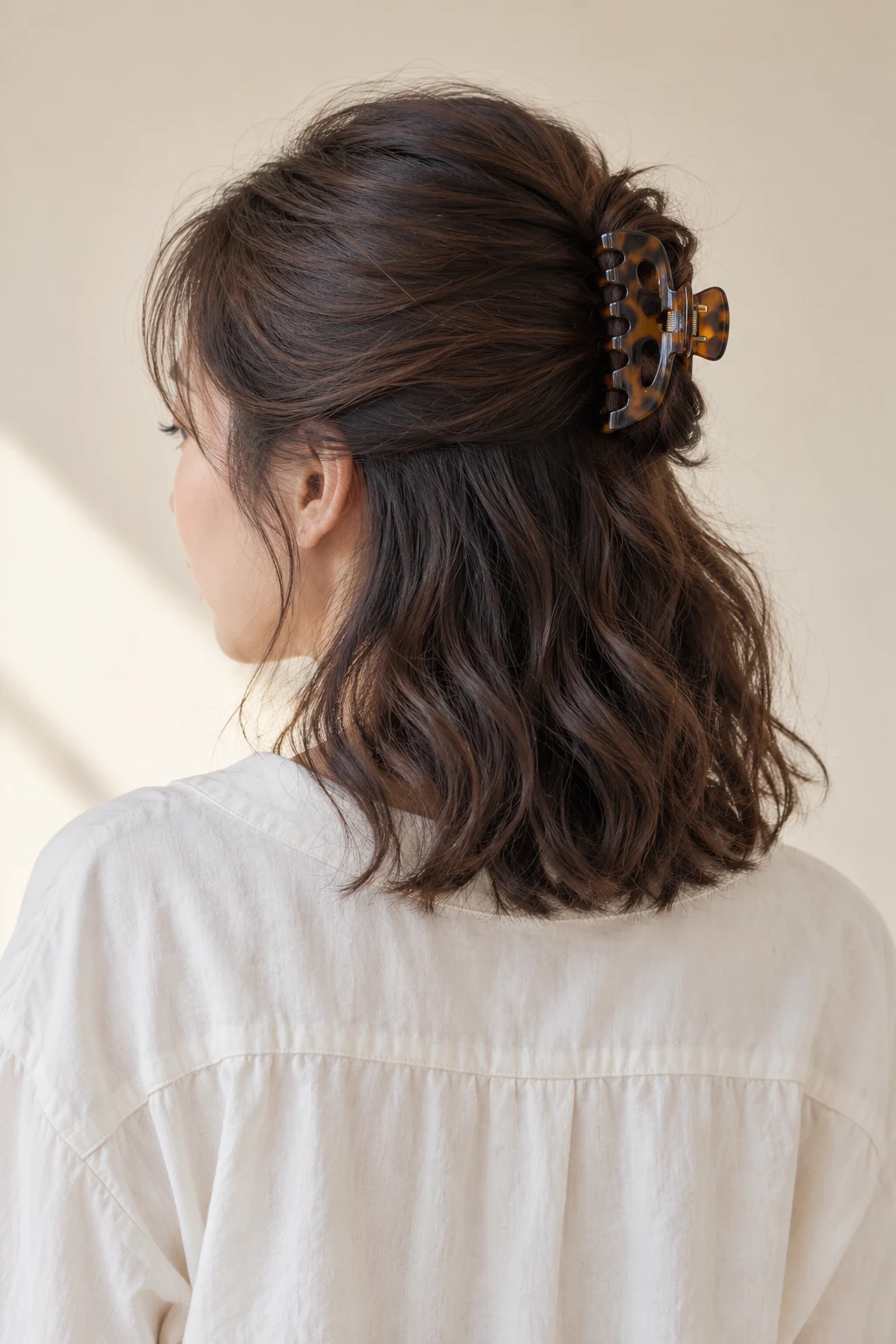
Use the hairstyle you intend to wear when comparing a clip you already own. Note what is actually inside it: a small upper section, most of the back section, or the whole length folded into a twist. A photograph of a finished style cannot supply a measured jaw opening or prove that the same accessory will suit someone else.
Fit checklist, size labels and choosing between shapes
What to check beyond the length
Look at the space between the opposing jaws, the curve of the body and the shape of the teeth. Two clips with the same stated length can surround different bundles of hair. The two 4.5-inch examples above make length an easy comparison, but do not establish equal capacity.
- Usable room: does the clip have space around the section you want to gather, without forcing the hinge?
- Contact: can the opposing teeth engage the hair as intended, rather than resting loosely on the outside?
- Pressure: if the position pulls or the teeth press uncomfortably, release it and reconsider the fit or placement.
- Profile: check how far the clip projects from the head in the position you actually use.
- Construction: inspect the hinge and teeth for damage before wearing an existing clip.
These are practical selection checks, not a tested fastening tutorial. We do not assign a universal clip size from a photograph, a curl pattern or a label such as “thick.” Density, strand thickness, length and the section gathered are different considerations.
Use size letters within a brand
“Medium,” “large” and “jumbo” are not shared measurements across all sellers. Read the actual dimensions for the exact model. When moving between brands, carry over the measurement and the job you need, rather than assuming a familiar size letter means the same thing.
If a listing omits the jaw opening or useful capacity information, ask the seller how that model compares with a clip you know. Give the intended style and the model’s measured dimensions. A size quiz can help narrow choices, but it is still selection guidance rather than a guaranteed result.
Choose the shape for the situation
A curved open clip leaves parts of the hair visible through its frame. A flatter clip changes the outline at the back of the head. Consider which shape fits your intended finish and the places you sit, while keeping capacity a separate question. We have not verified comfort, durability or all-day wear for either design.
Start with the clip you already own if it suits the job. If it does not, identify the problem before buying: too little usable room, too much bulk for a small section, a projecting profile, or uncomfortable contact. That is more useful than collecting several similar clips without knowing what each one needs to solve.
Sources and editorial method
Updated 24 October 2026. Product lengths and intended hair amounts come from the three linked TELETIES model pages. Other comparisons are our editorial selection guidance. Both hairstyle pictures are original generated finish references; neither is a real product test, a before-and-after image or proof of a styling sequence.
For more finish references, see our everyday hairstyles collection. For other equipment decisions, use the tools and product-role guide. A clip changes how hair is gathered; it does not create the layers in a haircut reference.